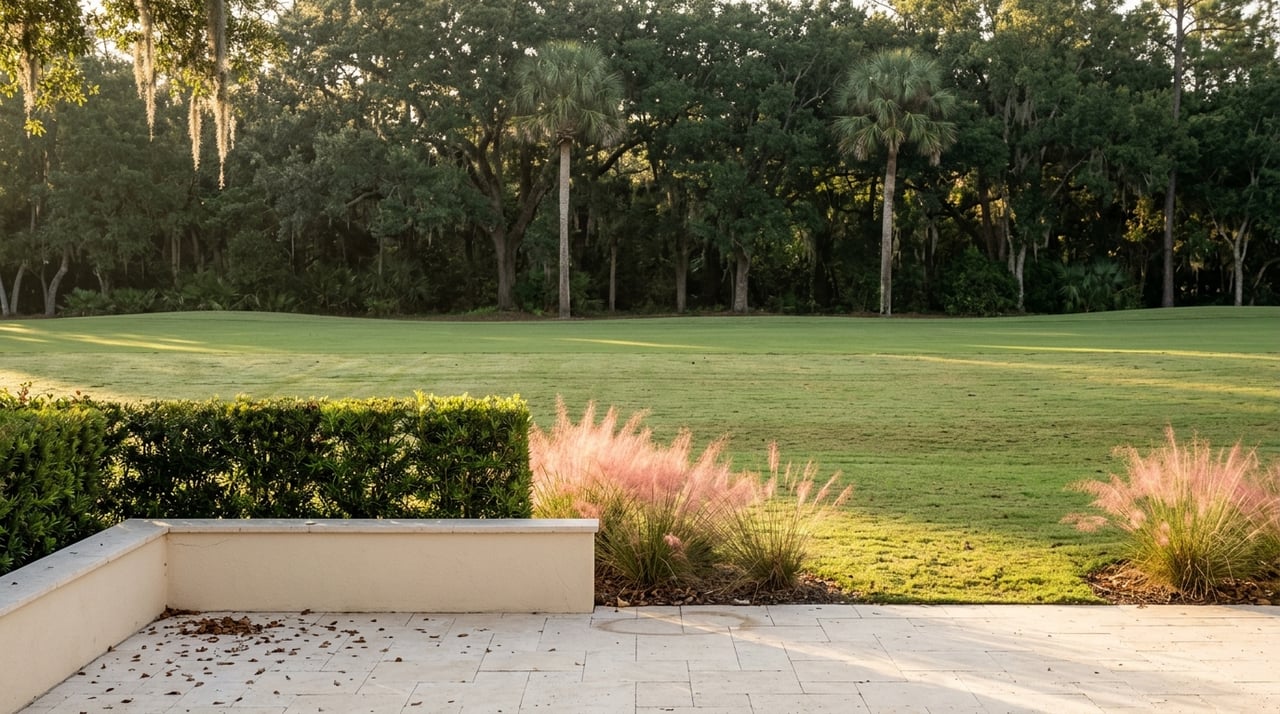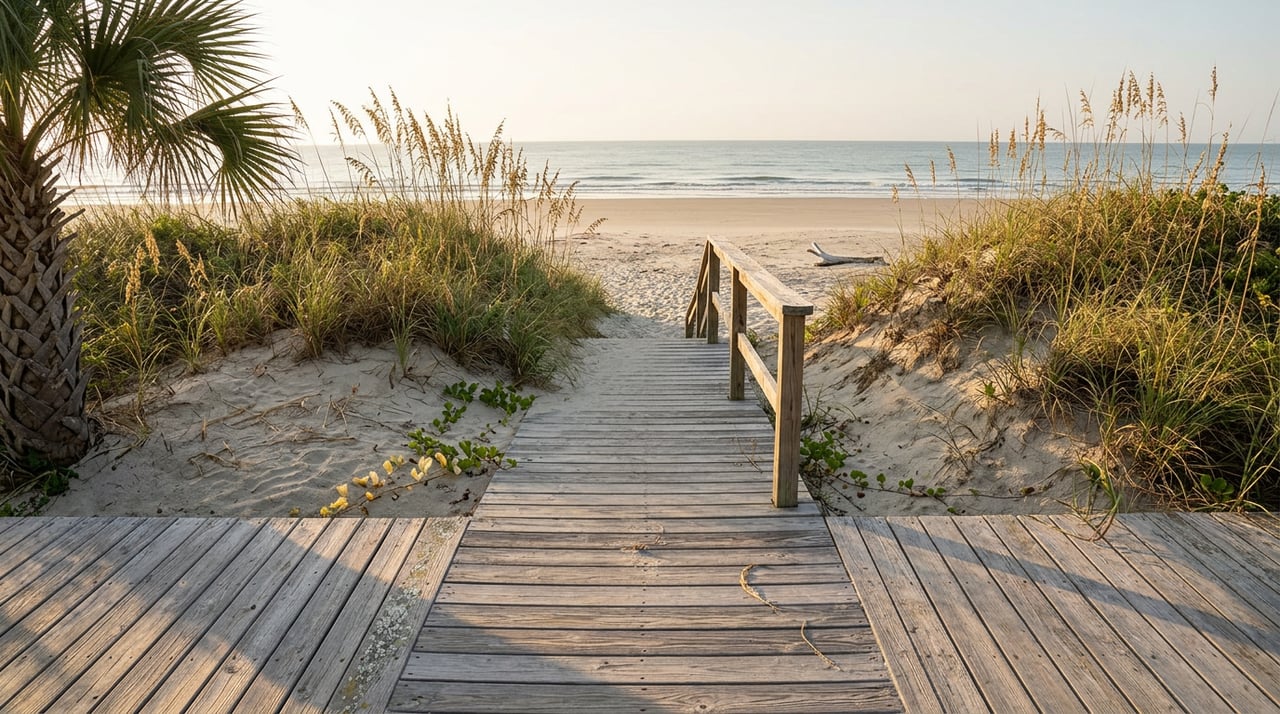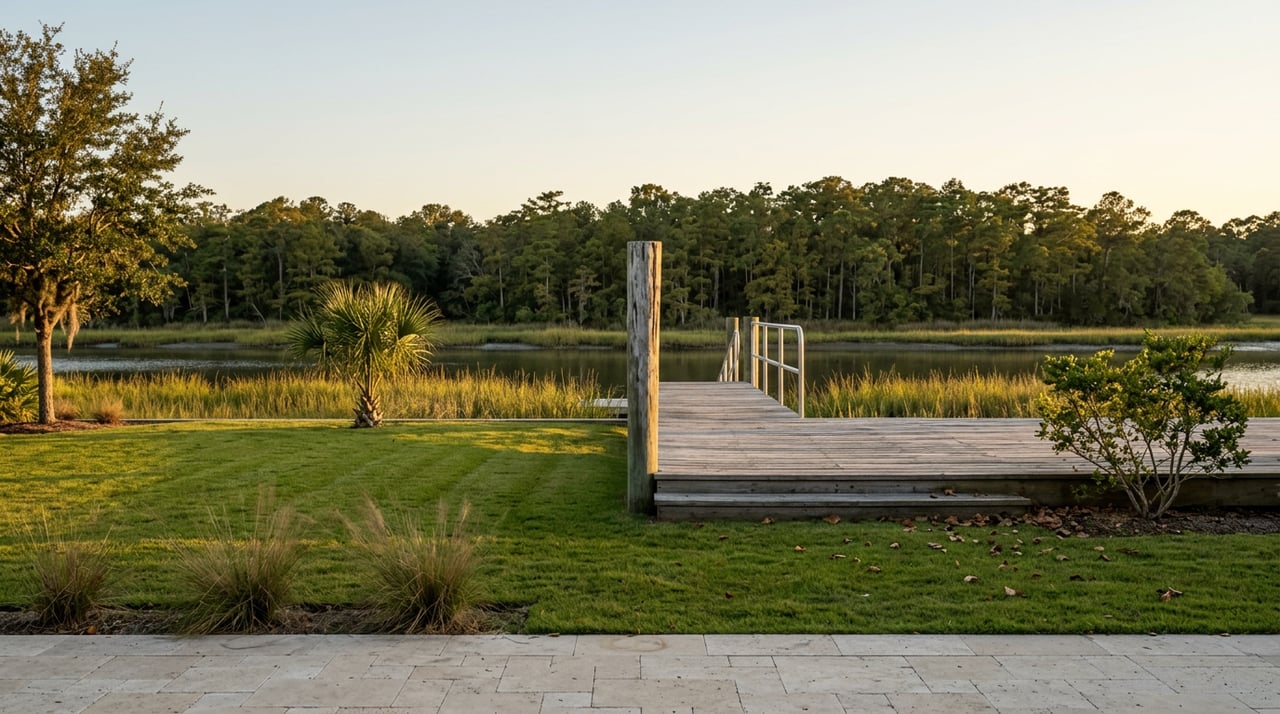
Nine miles of Old Ponte Vedra coastline now sit behind dunes rebuilt to a height they haven't seen in decades. St. Johns County finished the $38.6 million Ponte Vedra Beach Restoration Project two months ahead of schedule, and the sand is exactly where the engineers wanted it.
None of that changes what happens the day you sign a listing agreement on a home seaward of the Coastal Construction Control Line.
That's the disconnect catching sellers off guard right now. The beach got fixed. The paperwork that governs your sale runs on an entirely separate track, and it hasn't moved an inch. If you're preparing to list an oceanfront home in Old Ponte Vedra, the dune isn't the thing that decides how smoothly your closing goes. Three other things are, and none of them care how much sand just got pumped onto the beach.
What Nine Miles of New Dune Actually Bought You
The restoration project rebuilt dunes to between 13 and 18 feet, raised the berm by roughly 8 feet, and widened the beach by 40 to 180 feet depending on the stretch, running from the Duval County line down to the Guana Tolomato Matanzas National Estuarine Research Reserve. The contractor, Weeks Marine, moved fast enough with two dredges working simultaneously that the county closed out the project by the end of June instead of its original mid-August target.
That's real storm protection for the homes sitting behind it. It is not a reset button for anything a title company, an insurer, or the Florida Department of Environmental Protection looks at when your home changes hands. The Erosion Control Line that now defines the project area was recorded at the end of December 2023, and it sits at a fixed legal position regardless of how much sand moves in front of it during the next storm season.
South of the restoration project, the county is still working through a separate FEMA Category G sand project between 2539 South Ponte Vedra Boulevard and Serenata, with more than a million cubic yards of sand planned and over 93 percent of the required property easements already secured. As of this summer the county's own coastal projects page has that construction sliding to late 2026, a few months later than the spring or summer timeline first floated. If your property falls in that stretch, don't assume the sand has already arrived. Check before you set expectations with a buyer.
The Line That Doesn't Move With the Sand
Florida law treats any home located partially or totally seaward of the Coastal Construction Control Line as a distinct category of sale, and Old Ponte Vedra has more of these than almost anywhere else in St. Johns County. Under Florida Statute 161.57, the seller has to hand the buyer a written disclosure, in specific statutory language, stating that the property may be subject to coastal erosion and to regulations covering construction, protective structures, beach nourishment, and marine turtle protection.
That part surprises almost nobody. The part that does catch sellers off guard: unless the buyer waives it in writing, you also have to deliver a survey or affidavit locating the actual CCCL line on the property before closing. That's a separate document from the disclosure language, it takes lead time to produce, and it's easy to discover you need it the week you'd hoped to close rather than the week you listed.
Skipping either step doesn't unwind the contract or cloud the title. It does put you in a position where a well-represented buyer can ask why a required document is missing at the exact moment you have the least leverage to say no.
The Permit That Only Appears When You Touch the Foundation
Old Ponte Vedra has one of the more active teardown-and-rebuild markets on the First Coast, with 1960s and 1970s ranch homes routinely coming down for new two-story builds. That pattern runs straight into a CCCL rule most sellers never think about until it's their problem.
The state's own permitting guidance draws a hard line between maintenance and reconstruction. Routine repairs to an existing structure, replacing a roof, windows, siding, are generally exempt from CCCL permitting. The exemption disappears the moment work touches the foundation.
| Type of work | CCCL permit required? |
|---|---|
| Roof replacement | Generally exempt |
| Window or door replacement | Generally exempt |
| Siding replacement | Generally exempt |
| Second-floor addition, no foundation work | Generally exempt |
| Foundation repair or modification | Permit required |
| New construction or full rebuild | Permit required |
For a buyer planning to tear down and rebuild, or for a seller who's already had foundation work done, this isn't a formality. It's the difference between a straightforward renovation timeline and a Florida Department of Environmental Protection permitting process layered on top of the county's own approvals. If you know a buyer's intent is to rebuild, saying so early saves everyone a discovery they'd rather not make mid-contract.
What Actually Slows an Oceanfront Closing
Ask most sellers what could derail their sale and they'll say a bad inspection or a low appraisal. In Old Ponte Vedra, the more common stall point is the buyer's insurance underwriting, and it has almost nothing to do with the beach restoration project.
Much of the neighborhood sits in FEMA Zone AE, but the closer a lot sits to the water, the more likely it falls into Zone VE, the coastal high hazard designation where underwriters price in breaking wave action and apply stricter construction standards. Flood coverage is never included in a standard homeowners policy in either zone, so it's a separate line item a buyer has to secure regardless of what the dune looks like.
Age plays its own trick on older oceanfront homes here. Constant salt spray and wind-driven sand wear down shingles, fasteners, and flashing faster within a mile or two of the ocean than they do even a few streets inland, so a roof that's technically ten years old can present to an underwriter like one twice that age. That collides directly with the roof-age thresholds Florida carriers use to decide whether they'll write a policy at all, which is exactly the kind of thing that surfaces during a buyer's financing process rather than during your own pre-listing walkthrough.
Two more numbers worth knowing before you accept an offer. The hurricane deductible on a Florida coastal policy is calculated as a percentage of the dwelling limit, typically 2 to 5 percent and sometimes higher, not as a flat dollar figure like every other deductible on the policy. And standard policies commonly cap ordinance-and-law coverage at just 10 percent of the dwelling limit, which is frequently short of what it actually costs to bring an older home up to current code after a covered loss. Neither of these numbers changes because the county just spent $38.6 million on sand.
The dune protects the house. It doesn't touch the line, the permit, or the policy.
Before You List an Old Ponte Vedra Oceanfront Home
A little groundwork before you go active saves real time later:
- Confirm whether your property requires a CCCL survey or affidavit, and if the buyer hasn't waived it in writing, get it started before you have an offer to work around.
- If you've had any foundation work done, even repairs, have documentation ready. It's the first thing a buyer's CCCL permit review will ask about.
- Get a current wind mitigation inspection on file. It's what unlocks premium credits for hip roofs, roof-deck attachment, and impact-rated openings, and buyers will ask for one anyway.
- Know your flood zone designation, AE or VE, before a buyer's lender tells you.
- If your home sits within the FEMA Category G project boundary south of Mickler's Landing, don't represent the sand as already placed. Construction is currently expected in late 2026.
A Few Questions Worth Answering Directly
Does the beach restoration project change my home's flood zone? No. Renourishment adds sand and dune elevation for storm protection. It does not alter FEMA flood zone designations or reset how an insurer classifies the property.
Can I still rebuild if my home is seaward of the CCCL line? Often, yes, but new construction and any work touching the foundation requires a Florida DEP permit in addition to standard county approvals, on top of whatever exists for maintenance-only repairs.
If I skip the CCCL survey requirement, does that undo the sale? Not legally. Failing to deliver the survey or affidavit doesn't affect title or void the contract. It does leave you exposed to a buyer raising it as a last-minute issue if it wasn't handled ahead of time.
Selling an oceanfront home in Old Ponte Vedra rewards sellers who treat the disclosure survey, the permitting history, and the insurance picture as part of pre-listing preparation rather than something to sort out after an offer lands. Tyler Ackland and Susan Fort work these transactions from the first walkthrough to the closing table, with the local knowledge to get ahead of the parts of an oceanfront sale that a rebuilt dune can't fix for you. Schedule Your Private Consultation to talk through what your specific address requires before it ever hits the market.